Why Most Service Brands Struggle With Consistency Even With a Marketing Team
In service driven industries, consistency is often treated as a visual problem. Many organizations assume that inconsistency comes from outdated graphics, weak social media execution, or a lack of posting frequency. As a result, companies invest in rebrands, isolated campaigns, or one off creative projects hoping their visibility will improve.
But consistency problems rarely begin with design alone.
Most organizations struggle with consistency because they lack systems.
This issue becomes even more visible in industries built on trust and reputation, including law firms, healthcare organizations, consultants, and professional service businesses. In these sectors, every touchpoint influences perception. A website, social media profile, ad campaign, blog post, intake process, or email signature all contribute to how the market understands the brand.
When those experiences feel disconnected, trust weakens.
This is why some organizations appear polished in one area while feeling fragmented everywhere else. Their marketing may be active, but the underlying structure is inconsistent.
The problem is not always effort. The problem is often the absence of alignment, documentation, and scalable content systems.
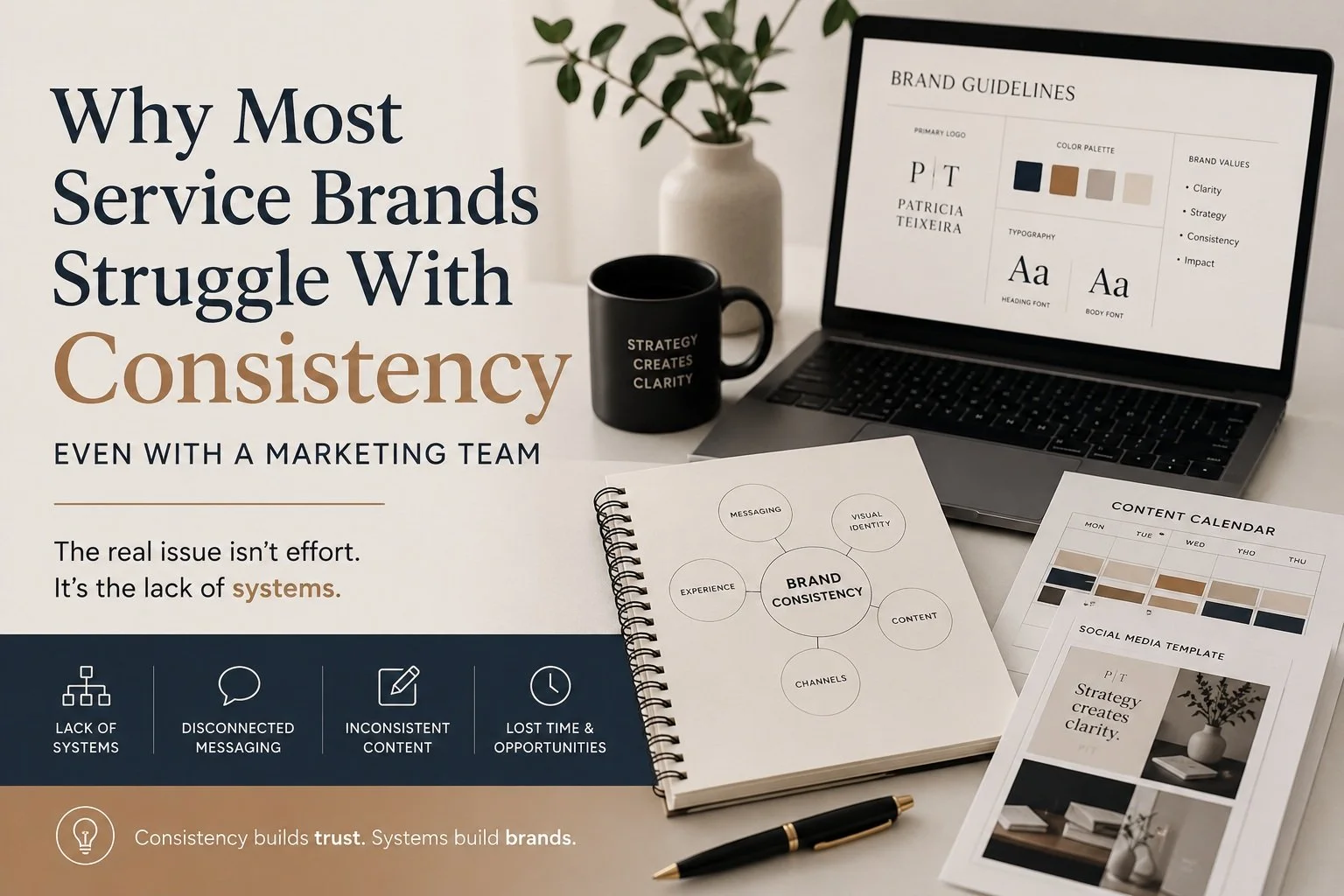
Consistency Is Not About Aesthetics Alone
One of the most common misconceptions in marketing is that consistency simply means using the same colors, fonts, or logo everywhere.
Visual consistency matters, but it is only one layer of brand consistency.
True consistency includes:
Messaging consistency
Tone of voice consistency
Content structure consistency
Strategic consistency
Workflow consistency
Audience positioning consistency
Internal communication consistency
This distinction matters because organizations can look visually polished while still communicating conflicting ideas.
For example, a law firm may position itself as compassionate and client focused on its website, while its social media content feels overly corporate and transactional. A healthcare organization may publish educational content on LinkedIn while running aggressive sales focused ads that create confusion around the brand identity.
These inconsistencies weaken recognition and trust over time.
Research from Lucidpress found that consistent brand presentation across channels can increase revenue by up to 33 percent because consistency improves familiarity and trust during decision making processes.
Source: The State of Brand Consistency https://marq.com/resources/state-of-brand-consistency
In service industries, where decisions often involve emotional, financial, or legal risk, consistency becomes even more important. Buyers are not only evaluating expertise. They are evaluating reliability, professionalism, and credibility across every interaction.
Why Marketing Teams Still Struggle With Consistency
Many organizations assume that hiring a marketing coordinator, agency, or social media manager automatically solves consistency problems.
In reality, inconsistency often increases as businesses grow.
Why?
Because growth creates operational complexity.
As organizations expand, marketing responsibilities become fragmented across multiple people, departments, vendors, and platforms. Without a centralized system, every contributor begins interpreting the brand differently.
This often creates situations where:
Social media follows one direction
SEO content follows another
Paid campaigns prioritize short term conversions
Leadership communicates differently from the marketing department
Designers and writers operate without shared guidelines
Different vendors create disconnected visuals and messaging
Over time, these disconnected activities create brand drift.
Brand drift occurs when organizations slowly lose coherence across channels. Instead of reinforcing a recognizable identity, each channel begins functioning independently.
Research consistently shows that brand consistency plays a direct role in trust, recognition, and long term business growth. According to the Forbes Communications Council, organizations that maintain consistent branding across channels are more likely to strengthen audience trust and improve overall brand recognition, particularly in high consideration industries where credibility influences decision making.
Source:The Importance of Consistency in Branding – Forbes Communications Council
Inconsistent communication does not simply create aesthetic problems. It creates operational inefficiencies that affect performance across the entire marketing ecosystem.
The Hidden Cost of Inconsistency
Many businesses underestimate how expensive inconsistency actually is.
The cost is not limited to visual confusion. Inconsistency affects visibility, efficiency, conversions, and long term growth.
Some of the most common consequences include:
Reduced Trust
Trust is built through repetition and predictability. When messaging changes constantly, audiences struggle to understand what the organization actually represents.
This becomes particularly damaging for law firms and professional service providers because credibility is central to client acquisition.
Slower Decision Making
Research from Edelman’s Trust Barometer consistently shows that trust and clarity influence purchase decisions, especially in high consideration industries.
Source: Edelman Trust Barometerhttps://www.edelman.com/trust-barometer
When marketing feels inconsistent, buyers hesitate. They delay inquiries, compare more competitors, and require additional validation before engaging.
Lower Content Performance
Disconnected content strategies often lead to duplicated efforts, weak SEO alignment, and scattered audience targeting.
For example:
Social content may discuss topics unrelated to the website
Blogs may not support service page visibility
Paid campaigns may target themes unsupported by organic content
This weakens overall search authority and reduces reinforcement across channels.
Organizations investing in strategic content systems and SEO aligned messaging often experience stronger long term visibility because their content ecosystem works together rather than independently.
Businesses investing in structured content planning often improve visibility by aligning blogs, service pages, and supporting educational content around shared search intent. This approach strengthens topical authority and creates more cohesive customer journeys.
If you want to understand how alignment impacts visibility across channels, explore our article on Visibility Framework: Why Visibility Fails and What Alignment Actually Fixes.
Increased Operational Friction
Without systems, teams constantly recreate assets, rewrite messaging, and reinvent workflows.
This leads to:
Longer approval cycles
Duplicate work
Internal confusion
Vendor inconsistency
Slower execution
Higher creative costs
The issue is rarely a lack of effort. It is a lack of structure.
Why Content Systems Matter
Content systems solve consistency problems by creating repeatable frameworks that scale across teams and channels.
A content system is not simply a template library.
It is a structured operational framework that includes:
Brand guidelines
Messaging hierarchy
Visual standards
Content pillars
Template systems
Workflow structures
Approval processes
SEO alignment
Channel specific positioning
These systems reduce decision fatigue while increasing consistency.
For example, organizations using structured Canva systems and centralized brand kits can dramatically improve execution speed because teams no longer start from scratch for every campaign.
This is one reason businesses increasingly invest in scalable marketing infrastructure rather than isolated creative projects.
Our Complete Brand Kit and Canva System package was designed specifically to solve these operational gaps by helping organizations centralize templates, messaging, and visual standards into one cohesive framework.
Instead of relying on scattered assets across multiple platforms, teams gain a unified system that supports long term visibility and easier collaboration.
Consistency Creates Recognition
One of the most overlooked benefits of consistency is recognition.
Recognition is not created through a single viral campaign. It is built through repeated exposure to cohesive messaging and visuals over time.
According to the Ehrenberg Bass Institute highlights the importance of mental availability, or how easily buyers recognize and recall a brand during key decision making moments. Consistent messaging, repeated brand signals, and recognizable positioning all contribute to stronger market visibility over time.
Source:How Brands Grow – Ehrenberg Bass Institute
Consistency strengthens mental availability because it reinforces recognizable patterns.
These patterns include:
Repeated messaging themes
Consistent visual structures
Familiar language
Predictable positioning
Reinforced expertise areas
Organizations with fragmented marketing often struggle with visibility because audiences cannot clearly identify what the brand stands for.
This becomes particularly problematic online, where users encounter brands across multiple touchpoints before making decisions.
For example, a potential client may:
Discover a blog through Google
Visit the website
Review social media
Watch short form content
Read reviews
Compare competitors
Return later through a paid ad
Every interaction contributes to perception.
Consistency ensures these touchpoints reinforce one another instead of competing with one another.
Why Canva Systems Are Becoming Essential
As content production accelerates, businesses increasingly need scalable systems that allow teams to create materials efficiently without compromising quality or consistency.
This is why Canva systems have become so valuable for service based organizations.
A properly structured Canva system allows organizations to:
Maintain visual consistency
Simplify content creation
Improve collaboration
Reduce dependency on external designers
Accelerate campaign production
Organize brand assets centrally
More importantly, Canva systems support operational consistency.
When templates, messaging, layouts, and brand assets are centralized, teams produce content faster and with fewer inconsistencies.
This is especially important for organizations producing:
Social media graphics
Educational content
Paid advertising assets
Presentations
Lead magnets
Blog visuals
Internal documents
Without systems, content creation becomes reactive and fragmented.
With systems, content becomes scalable.
Our Starter Brand Kit and Complete Brand Kit and Canva System packages help organizations create these foundational systems while maintaining strategic alignment across channels.
The Difference Between Activity and Structure
One reason many organizations struggle with consistency is because they focus heavily on output while ignoring infrastructure.
More content does not automatically create stronger visibility.
More activity without structure often amplifies fragmentation.
This is why businesses can post daily and still struggle with:
Weak engagement
Low conversion rates
Unclear positioning
Poor recognition
Inconsistent lead quality
Structure creates clarity.
Structure allows every piece of content to reinforce broader business objectives.
This includes:
SEO driven blog strategies
Strategic service page alignment
Cohesive social media messaging
Paid campaign reinforcement
Lead generation content systems
Without structure, marketing becomes reactive.
With structure, marketing becomes cumulative.
Each asset strengthens the next.
Why Service Brands Need Systems More Than Product Brands
Service based organizations face unique marketing challenges because buyers cannot physically evaluate the service before purchasing.
This means trust becomes the primary decision driver.
Buyers evaluate service providers through signals such as:
Professionalism
Clarity
Expertise
Organization
Consistency
Educational value
Communication style
Inconsistent marketing weakens these signals.
For example, if a law firm produces excellent educational blogs but inconsistent social content, buyers may question the organization’s professionalism or attention to detail.
Similarly, if a consultant has strong visuals but unclear messaging, prospects may struggle to understand the actual value being offered.
Consistency reduces uncertainty.
And reducing uncertainty is one of the most important goals in service marketing.
What Strong Brand Systems Actually Look Like
Strong brand systems are not rigid or repetitive.
They are structured enough to create consistency while remaining flexible enough to evolve across channels.
Healthy brand systems typically include:
Clear Positioning
The organization understands:
Who it serves
What it solves
How it differentiates itself
Centralized Visual Standards
Teams access:
Templates
Typography
Brand colors
Layout systems
Asset libraries
Messaging Frameworks
Everyone communicates using aligned:
Core themes
Tone of voice
Strategic narratives
Audience language
SEO and Content Alignment
Blogs, service pages, and educational resources reinforce shared visibility goals.
For example, businesses investing in Marketing Strategy and Content Foundations often improve long term organic performance because their content ecosystem supports broader authority building efforts rather than isolated keyword targeting.
Repeatable Workflows
Content creation follows:
Defined processes
Approval systems
Publishing structures
Organized asset management
These systems allow businesses to scale without losing clarity.
Final Thoughts
Most organizations do not struggle with consistency because they lack creativity.
They struggle because they lack systems.
As businesses grow, fragmented communication becomes increasingly common. Different channels, departments, vendors, and priorities begin operating independently, weakening the overall brand experience.
Consistency is not simply a design objective.
It is a strategic business function.
Strong content systems, Canva frameworks, messaging structures, and aligned visibility strategies help organizations create recognizable, scalable, and trustworthy brand ecosystems.
This is particularly important for service driven industries where trust directly influences conversion and client acquisition.
Visibility grows when marketing functions cohesively.
Recognition grows when messaging reinforces itself consistently.
Trust grows when audiences experience clarity across every touchpoint.
And long term growth becomes easier when structure supports every layer of communication.
If your organization is struggling with fragmented marketing, inconsistent visuals, or disconnected messaging, explore our Brand Kits and Canva Systems or Marketing Strategy and Content Foundations services to build a stronger, more scalable visibility framework.
Looking to Build a More Aligned Brand System?
If your organization needs stronger brand consistency, content structure, or marketing clarity, explore our service packages designed for law firms, health brands, and service driven teams.
